Here's a breakdown:
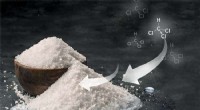
* The Reaction: Magnesium (Mg) is a reactive metal, and acids contain hydrogen ions (H+). When they react, the magnesium atoms lose electrons and become magnesium ions (Mg2+), while hydrogen ions gain electrons and form hydrogen gas (H2). The remaining ions combine to form a salt, typically magnesium chloride (MgCl2) if hydrochloric acid (HCl) is used.
* The Equation: A simplified chemical equation representing this reaction is:
```
Mg(s) + 2HCl(aq) → MgCl2(aq) + H2(g)
```
Where:
* Mg(s) is solid magnesium
* HCl(aq) is hydrochloric acid in solution
* MgCl2(aq) is magnesium chloride in solution
* H2(g) is hydrogen gas
* Observations: You would likely observe:
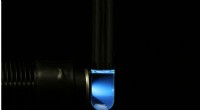
* Bubbles: The reaction produces hydrogen gas, which escapes as bubbles.
* Heat: The reaction is exothermic, meaning it releases heat, which may be noticeable depending on the concentration of the acid.
* Dissolving: The magnesium metal will dissolve as it reacts with the acid.
Important Considerations:
* Safety: This reaction can be quite vigorous, especially with concentrated acids. It's essential to perform it in a well-ventilated area and wear appropriate safety equipment, like gloves and goggles.
* Types of Acids: Different acids will produce different salts. For example, sulfuric acid (H2SO4) would produce magnesium sulfate (MgSO4).
Overall, the reaction between acid and magnesium is a classic example of a single displacement reaction, producing hydrogen gas and a salt.