Here's a breakdown of what nuclear physics encompasses:
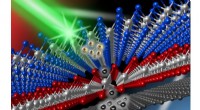
* Structure of the Nucleus: This includes studying the arrangement of protons and neutrons within the nucleus, their interactions, and the forces that hold them together.
* Nuclear Properties: Nuclear physicists investigate properties like nuclear size, shape, spin, and energy levels.
* Nuclear Reactions: They study how nuclei interact with each other and with other particles, including nuclear fission, fusion, and radioactive decay.
* Radioactivity: Understanding the different types of radioactive decay and their applications in medicine, dating, and other fields.
* Nuclear Models: Developing theoretical models to explain the behavior of nuclei and predict their properties.
Nuclear physics has many important applications in areas like:
* Energy production: Nuclear power plants use nuclear fission to generate electricity.
* Medicine: Radioactive isotopes are used in diagnostic imaging and cancer treatment.
* Material science: Nuclear techniques are used to study the structure and properties of materials.
* Cosmology: Nuclear processes are essential to understanding the formation and evolution of stars and galaxies.