Here's why:
* Sublimation is the process where a solid changes directly into a gas without passing through the liquid state.
* Ammonium chloride has a relatively high vapor pressure, meaning its molecules readily escape into the gas phase.
* Heating ammonium chloride will cause it to directly convert into gaseous ammonia (NH₃) and hydrogen chloride (HCl).
Here's an example:
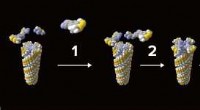
If you heat ammonium chloride in a test tube, you'll notice white fumes forming. These fumes are the gaseous products of sublimation. As the fumes cool, they can condense back into solid ammonium chloride, demonstrating the reversibility of the process.