* Water exists in three states: solid (ice), liquid (water), and gas (water vapor).
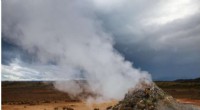
* Water vapor forms when liquid water evaporates or when ice sublimates (turns directly into gas).
* It's invisible to the naked eye unlike clouds, which are made of water droplets or ice crystals.
* It's a significant component of Earth's atmosphere and plays a critical role in the water cycle and weather patterns.
Here's how it works:
1. Evaporation: When liquid water is heated, its molecules gain energy and move faster. Some molecules gain enough energy to break free from the liquid surface and escape into the air as water vapor.
2. Sublimation: Similar to evaporation, ice can directly transform into water vapor without passing through the liquid state. This happens at colder temperatures.
3. Condensation: As water vapor rises in the atmosphere, it cools down. When the air cools enough, water vapor molecules slow down, lose energy, and clump together to form tiny water droplets or ice crystals. This condensation process creates clouds, fog, and eventually precipitation.
In summary:
Gaseous water vapor is essential for life on Earth. It helps regulate temperature, forms clouds and precipitation, and plays a crucial role in the water cycle. It's a dynamic component of our atmosphere, constantly moving and changing states.