* KBr is an ionic compound: KBr consists of potassium ions (K⁺) and bromide ions (Br⁻) held together by electrostatic forces.
* Water is a polar molecule: Water has a bent shape, with the oxygen atom being more electronegative than the hydrogen atoms. This results in a partial negative charge on the oxygen and partial positive charges on the hydrogens, making water a polar molecule.
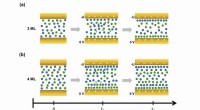
* Ion-Dipole Interaction: When KBr dissolves in water, the positively charged potassium ions (K⁺) are attracted to the partially negative oxygen atoms of water molecules. Similarly, the negatively charged bromide ions (Br⁻) are attracted to the partially positive hydrogen atoms of water molecules. These electrostatic attractions between the ions and the polar water molecules are called ion-dipole interactions.
In summary: The dissolution of KBr in water is driven by the favorable ion-dipole interactions that overcome the lattice energy of the KBr crystal.