Metal Ions:
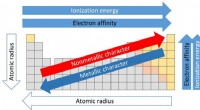
* Loss of Electrons: Metal ions form by *losing* electrons to achieve a stable electron configuration.
* Positive Charge: The loss of electrons results in a positive charge on the ion.
* Fewer Dots: Since electrons are lost, metal ion diagrams have *fewer* dots than the neutral atom.
* Example: Sodium (Na) has 1 valence electron. When it forms Na+, it loses that electron, resulting in a diagram with *no* dots.
Nonmetal Ions:
* Gain of Electrons: Nonmetal ions form by *gaining* electrons to achieve a stable electron configuration.
* Negative Charge: The gain of electrons results in a negative charge on the ion.
* More Dots: Since electrons are gained, nonmetal ion diagrams have *more* dots than the neutral atom.
* Example: Chlorine (Cl) has 7 valence electrons. When it forms Cl-, it gains one electron, resulting in a diagram with *8* dots.
In Summary:
* Metals lose electrons and become positive ions with fewer dots.
* Nonmetals gain electrons and become negative ions with more dots.
Visual Example:
Let's compare sodium (metal) and chlorine (nonmetal):
* Na (neutral): Na • (1 dot)
* Na+ (ion): (No dots)
* Cl (neutral): •Cl• • • • • (7 dots)
* Cl- (ion): •Cl• • • • • • • (8 dots)