* Ionic Bonding: In NaCl, sodium (Na) loses an electron to become a positively charged ion (Na+), while chlorine (Cl) gains that electron to become a negatively charged ion (Cl-). These oppositely charged ions are strongly attracted to each other through electrostatic forces, forming an ionic bond.
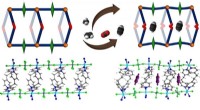
* No Discrete Molecules: Ionic compounds don't exist as individual, discrete molecules like covalent compounds do. Instead, they form a crystal lattice where countless ions are arranged in a repeating three-dimensional pattern. This lattice structure extends indefinitely, making it impossible to define individual NaCl molecules.
Contrast with Molecular Compounds:
* Covalent Bonding: In covalent compounds, atoms share electrons to form a stable molecule. For example, in water (H2O), hydrogen and oxygen atoms share electrons to form distinct H2O molecules.
* Discrete Molecules: Covalent compounds consist of well-defined, individual molecules with a fixed number of atoms.
In Summary:
Sodium chloride (NaCl) is an ionic compound due to the electrostatic attraction between its constituent ions. This ionic bonding leads to a crystal lattice structure without discrete molecules, unlike molecular compounds formed by covalent bonds.