Reason:
Limiting molar conductivity (Λ°) is a measure of the conductivity of an electrolyte solution at infinite dilution. It represents the maximum conductivity that can be achieved by the electrolyte when the concentration approaches zero.
The limiting molar conductivity is influenced by several factors, including:
* Ionic mobility: Ions with higher mobility contribute more to the conductivity.
* Ionic size: Smaller ions tend to have higher mobility due to less resistance to movement in the solution.
* Hydration: Ions that are more strongly hydrated have lower mobility because they are surrounded by a larger shell of water molecules.
In the case of NaCl and KCl:
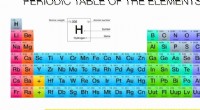
* Ionic size: K⁺ ions are larger than Na⁺ ions.
* Hydration: K⁺ ions are less strongly hydrated than Na⁺ ions.
Therefore:
* K⁺ ions have higher mobility than Na⁺ ions due to their larger size and weaker hydration.
* Cl⁻ ions have the same size and hydration in both NaCl and KCl.
As a result, KCl has a higher limiting molar conductivity than NaCl because the higher mobility of K⁺ ions outweighs the slightly lower mobility of Cl⁻ ions.
Experimental values:
* Λ°(NaCl) = 126.5 S cm² mol⁻¹
* Λ°(KCl) = 149.8 S cm² mol⁻¹
This experimental data confirms that KCl has a higher limiting molar conductivity than NaCl.