1. Substrate Binding:
* Enzymes have specific active sites, pockets or clefts, that are complementary in shape and charge to their specific substrate.
* This allows for a temporary interaction, like a lock and key, where the substrate binds to the active site, forming an enzyme-substrate complex.
2. Lowering Activation Energy:
* The binding of the substrate to the active site causes a change in the enzyme's shape, bringing the substrate molecules into a specific orientation that favors the reaction.
* This interaction weakens the bonds in the substrate, lowering the activation energy, which is the minimum energy required for the reaction to occur.
* By lowering the activation energy, the enzyme allows the reaction to proceed much faster than it would without the enzyme.
3. Catalysis and Product Formation:
* The enzyme facilitates the chemical transformation of the substrate, breaking or forming bonds, leading to the formation of products.
* Once the reaction is complete, the products are released from the active site, and the enzyme is free to bind to another substrate molecule.
4. Specificity:
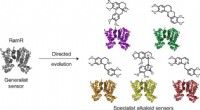
* Enzymes are highly specific, meaning they only catalyze a particular reaction or a small set of related reactions.
* This specificity arises from the precise fit between the enzyme's active site and its specific substrate.
In summary:
The interaction between an enzyme and its substrate:
* Increases the reaction rate by lowering the activation energy.
* Facilitates the formation of products through specific interactions in the active site.
* Ensures high specificity due to the lock-and-key fit between enzyme and substrate.
This interaction is fundamental to all biological processes, as it allows for efficient and controlled chemical transformations in living organisms.