* Intermolecular Forces: The strength of intermolecular interactions between molecules dictates their overall interaction strength.
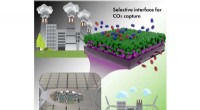
* CO2: Carbon dioxide is a linear molecule with only London dispersion forces (weakest type) due to its nonpolar nature.
* NO2: Nitrogen dioxide is a bent molecule with a permanent dipole moment, leading to stronger dipole-dipole interactions.
* SO2: Sulfur dioxide is also a bent molecule with a permanent dipole moment and can participate in dipole-dipole interactions. Additionally, sulfur is larger and more polarizable than oxygen, increasing its London dispersion forces.
* H2S: Hydrogen sulfide has a bent shape and can exhibit weak hydrogen bonding interactions due to the presence of hydrogen attached to a highly electronegative sulfur atom.
* Polarizability: Larger and more complex molecules are more polarizable, leading to stronger London dispersion forces. CO2 is the smallest and least polarizable among the four.
In summary: CO2, being nonpolar and having the weakest intermolecular forces, experiences the weakest interaction among the given molecules.