1. Reaction:
Ferrous sulfate (FeSO₄) reacts with ammonium hydroxide (NH₄OH) to produce ferrous hydroxide (Fe(OH)₂) and ammonium sulfate ((NH₄)₂SO₄).
FeSO₄(aq) + 2NH₄OH(aq) → Fe(OH)₂(s) + (NH₄)₂SO₄(aq)
2. Formation of Ferrous Hydroxide:
* The ferrous ions (Fe²⁺) from ferrous sulfate react with the hydroxide ions (OH⁻) from ammonium hydroxide.
* This results in the formation of insoluble ferrous hydroxide (Fe(OH)₂), which precipitates out of solution as a green solid.
3. Ammonium Sulfate:
* The ammonium ions (NH₄⁺) from ammonium hydroxide and the sulfate ions (SO₄²⁻) from ferrous sulfate remain in solution as ammonium sulfate ((NH₄)₂SO₄).
Observations:
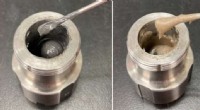
* Green precipitate: The most noticeable observation is the formation of a green, gelatinous precipitate of ferrous hydroxide.
* Color change: The solution may also appear slightly cloudy due to the precipitate.
Note: The reaction is reversible, meaning that some ferrous hydroxide can dissolve back into solution if the pH is adjusted or if excess ammonium hydroxide is added.