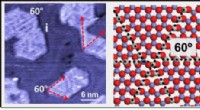
* Water's properties: Hydrogen bonds between water molecules give water its unique properties:
* High boiling point: Water has a relatively high boiling point due to the strong hydrogen bonds that need to be broken to vaporize it. This allows for life to exist in liquid water.
* High surface tension: Hydrogen bonding creates a strong cohesive force between water molecules, giving water a high surface tension. This is crucial for many biological processes, such as the movement of water through plants.
* Excellent solvent: Water's polarity allows it to dissolve many ionic and polar compounds, making it an excellent solvent for biological molecules.
* Protein structure: Hydrogen bonds are essential for maintaining the secondary and tertiary structures of proteins. They help to hold the polypeptide chains in their correct shape, enabling proteins to function properly.
* DNA structure: Hydrogen bonds hold the two strands of DNA together, forming the double helix. These bonds allow DNA to be replicated and transcribed accurately, essential for life.
* Enzyme-substrate interactions: Hydrogen bonds play a crucial role in the formation of enzyme-substrate complexes. These bonds allow enzymes to recognize and bind to their specific substrates, facilitating biochemical reactions.
In addition to these biological applications, hydrogen bonding also plays important roles in:
* Chemistry: Hydrogen bonds are important for the properties of many organic molecules, such as alcohols and carboxylic acids.
* Materials science: Hydrogen bonding is used in the synthesis of materials with specific properties, such as polymers and biocompatible materials.
Overall, hydrogen bonding is a ubiquitous force in nature, with profound implications for many areas of science and technology. Its importance in biology alone makes it a critical factor for life on Earth.