Here's why:
* Calcium (Ca) is a metal and tends to lose two electrons to become a positively charged ion (Ca²⁺).
* Chlorine (Cl) is a nonmetal and tends to gain one electron to become a negatively charged ion (Cl⁻).
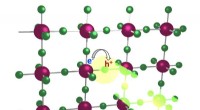
The strong electrostatic attraction between the positively charged calcium ion and the negatively charged chloride ions forms the ionic bond in calcium chloride.