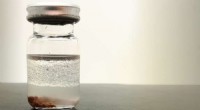
* Boiling Points: Water boils at 100°C, while salt has a much higher melting point of 801°C. When you heat a saltwater solution, the water will evaporate first, leaving the salt behind.
* Evaporation and Condensation: The evaporated water vapor can be collected and condensed back into liquid water, which is pure. This leaves the salt in the original container.
* Energy Consumption: Distillation requires significant energy input to boil the water. This makes it a relatively expensive and energy-intensive method for separating salt from water.
More Efficient Methods for Salt Separation:
* Evaporation: Simply heating the saltwater solution will cause the water to evaporate, leaving the salt behind. This is a more straightforward method than distillation.
* Reverse Osmosis: This method uses a semi-permeable membrane to separate the salt from the water, requiring less energy than distillation.
In summary, distillation is not an efficient method for separating salt from water because of the energy required and the fact that it's less effective than simpler methods like evaporation.