Here's a breakdown of the process:
1. The Reaction:
The general equation for reduction of a metal oxide is:
Metal Oxide + Metal → Metal + Metal Oxide
For example, the reduction of iron oxide (FeO) with carbon (C) can be represented as:
FeO + C → Fe + CO
2. Electron Transfer:
The metal (in this case, carbon) acts as a reducing agent, donating electrons to the metal oxide.
* Carbon loses electrons and is oxidized, forming carbon monoxide (CO).
* Iron oxide gains electrons and is reduced, forming elemental iron (Fe).
3. Thermodynamics:
The reduction process is often carried out at high temperatures, which provides the necessary energy for the reaction to occur. This is because the process typically involves breaking chemical bonds in the metal oxide.
4. Applications:
Metal reduction is a crucial process in many industrial applications, including:
* Metallurgy: Extracting metals from their ores.
* Chemical Synthesis: Producing specific chemicals.
* Catalysis: As a step in various catalytic processes.
5. Examples:
Here are some common examples of metal reduction processes:
* Blast Furnace: Used to reduce iron ore (Fe₂O₃) to iron metal. Coke (carbon) is used as the reducing agent.
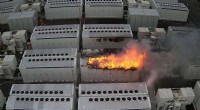
* Thermite Reaction: A highly exothermic reaction that utilizes aluminum (Al) to reduce iron oxide (Fe₂O₃) to molten iron.
In essence, reduction is a process that removes oxygen from a metal oxide by transferring electrons to the oxide, leading to the formation of the metal in its elemental form.