Molecular Structure:
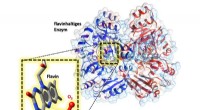
* Focus: Describes the arrangement of atoms within a single molecule.
* Scale: Deals with the nanoscopic level, focusing on the bonds, angles, and spatial relationships between atoms.
* Types of Bonds: Primarily involves covalent bonds, which are strong attractions between atoms that share electrons.
* Examples: Water (H₂O) has a bent molecular structure, while methane (CH₄) has a tetrahedral structure.
Crystal Structure:
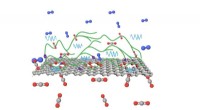
* Focus: Describes the three-dimensional arrangement of molecules (or ions) within a solid material.
* Scale: Deals with the microscopic level, encompassing the repeating pattern of molecules that extends throughout the material.
* Types of Bonds: Includes various types of bonds, such as covalent, ionic, metallic, and Van der Waals forces, depending on the specific crystal.
* Examples: Diamond has a face-centered cubic crystal structure, while sodium chloride (NaCl) has a face-centered cubic crystal structure with a NaCl lattice.
Key Differences:
* Scope: Molecular structure is about the internal arrangement of a single molecule, while crystal structure focuses on the extended arrangement of molecules in a solid.
* Bonding: Molecular structure is primarily concerned with covalent bonds, while crystal structure involves a variety of bonding types.
* Dimensions: Molecular structure is a 3D representation of a single molecule, while crystal structure describes a repeating 3D pattern.
* Implications: Molecular structure influences the chemical and physical properties of a molecule, while crystal structure determines the macroscopic properties of a solid material (e.g., hardness, conductivity, and melting point).
Analogy:
Imagine building a house.
* Molecular structure: This would be like the blueprint for a single brick. It shows the arrangement of atoms within the brick.
* Crystal structure: This would be like the overall design of the house, showing how the bricks are stacked and arranged to form walls, floors, and the entire structure.
In summary:
Molecular structure is the internal organization of a molecule, while crystal structure is the long-range arrangement of molecules within a solid material. Both are crucial for understanding the properties and behavior of matter.