Here's how the number of valence electrons affects carbon's bonding:
* Covalent Bonding: Carbon's four valence electrons allow it to readily form covalent bonds, sharing electrons with other atoms. This sharing creates strong bonds that are essential for building complex molecules.
* Four Bonds: Carbon typically forms four covalent bonds. This can be through:
* Single Bonds: Sharing one electron with another atom.
* Double Bonds: Sharing two electrons with another atom.
* Triple Bonds: Sharing three electrons with another atom.
* Diverse Structures: The ability to form single, double, and triple bonds, combined with its ability to bond with itself (catenation), allows carbon to form an incredible array of structures. This includes:
* Linear chains: Found in alkanes like methane (CH4).
* Branched chains: Found in branched alkanes like isobutane (C4H10).
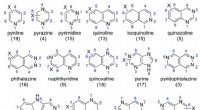
* Rings: Found in cyclic compounds like cyclohexane (C6H12).
* Complex 3D structures: Found in proteins, carbohydrates, and other macromolecules.
In summary, carbon's four valence electrons make it a versatile element capable of forming a vast array of covalent bonds, resulting in the incredible diversity and complexity of organic molecules.