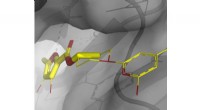
* Hydrogen Bonding: Both 1-butanol and 2-butanol can participate in hydrogen bonding, a strong intermolecular force that contributes significantly to boiling point. The hydrogen atom attached to the oxygen in the hydroxyl group (OH) can form a hydrogen bond with the oxygen atom of another alcohol molecule.
* Branching: The key difference lies in the branching of the carbon chain. 2-butanol has a branched structure, while 1-butanol has a straight chain.
* Intermolecular Forces: Branching in 2-butanol leads to a more compact molecule with less surface area available for intermolecular interactions. This reduced surface area weakens the London dispersion forces, which are weaker than hydrogen bonding but still play a role.
In summary:
* 2-butanol: Stronger hydrogen bonding due to the hydroxyl group being on a less-branched carbon, leading to a higher boiling point.
* 1-butanol: Weaker hydrogen bonding due to the hydroxyl group being on a more branched carbon, leading to a lower boiling point.
Let me know if you have any other questions!