1. State of Matter:
* Hydrogen and Oxygen: At room temperature and pressure, both are gases.
* Water: At room temperature and pressure, water is a liquid. This is due to the strong hydrogen bonds formed between water molecules.
2. Molecular Structure:
* Hydrogen and Oxygen: Both are diatomic molecules, meaning they exist as two atoms of the same element bonded together (H₂ and O₂).
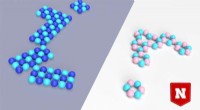
* Water: Water is a triatomic molecule, consisting of two hydrogen atoms bonded to one oxygen atom (H₂O). This bent shape and the polar nature of the molecule allow for hydrogen bonding.
3. Properties:
* Hydrogen and Oxygen: Both are colorless, odorless, and tasteless gases. Hydrogen is the lightest element and highly flammable. Oxygen is essential for respiration and combustion.
* Water: Water is a colorless, odorless, and tasteless liquid. It is a universal solvent, meaning it can dissolve many substances. Water has a high boiling point and a high surface tension, due to hydrogen bonding.
4. Bonding:
* Hydrogen and Oxygen: Both elements form covalent bonds within their diatomic molecules.
* Water: Water forms covalent bonds between the hydrogen and oxygen atoms. Additionally, hydrogen bonds form between different water molecules, contributing to its unique properties.
5. Chemical Reactivity:
* Hydrogen and Oxygen: Both are highly reactive elements. Hydrogen burns explosively in the presence of oxygen, producing water.
* Water: Water is relatively stable and inert under normal conditions. It participates in many chemical reactions, but it is not as reactive as its constituent elements.
In summary, water is fundamentally different from its constituent elements, hydrogen and oxygen, due to its distinct molecular structure, state of matter, properties, bonding, and reactivity. These differences stem from the formation of strong hydrogen bonds between water molecules, which give water its unique characteristics.