Here's why:
* Ionic Bonds: These bonds form when one atom (in this case, sodium) loses an electron, becoming a positively charged ion (Na+), and another atom (chlorine) gains that electron, becoming a negatively charged ion (Cl-). The opposite charges attract each other, creating a strong electrostatic force that holds the ions together.
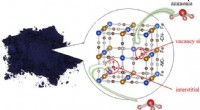
* Sodium Chloride (NaCl): This compound is a crystalline solid with a cubic structure. Each sodium ion is surrounded by six chloride ions, and each chloride ion is surrounded by six sodium ions.
In summary: Sodium chloride is formed by the electrostatic attraction between positively charged sodium ions and negatively charged chloride ions, creating an ionic bond.