Understanding the Terminology
* Sodium Chloride (NaCl): This is the chemical name for table salt.
* Solution: A mixture of two or more substances where one substance (solute) is dissolved in another (solvent).
* Concentration: How much solute is dissolved in a given amount of solvent.
Common Concentration Units
* Percent (%): The number of grams of solute per 100 milliliters (mL) of solution. This is often called "percent weight/volume" or "w/v".
* Molarity (M): The number of moles of solute per liter (L) of solution.
Preparing a Sodium Chloride Solution
You need to specify the desired concentration of your sodium chloride solution. Here's how to prepare a common one:
1. 0.9% Sodium Chloride Solution (Normal Saline)
* This is the most common saline solution used in medical settings.
* What you need:
* 0.9 grams of sodium chloride (NaCl)
* 100 mL of distilled or deionized water
* Instructions:
1. Weigh out 0.9 grams of NaCl.
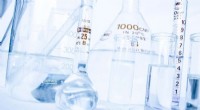
2. Add the NaCl to a graduated cylinder or volumetric flask.
3. Slowly add distilled or deionized water to the cylinder or flask until you reach the 100 mL mark.
4. Stir or shake the solution until the NaCl is completely dissolved.
2. Other Concentrations:
If you need a different concentration, follow these steps:
1. Determine the desired concentration: This will be in a unit like percent (%) or molarity (M).
2. Calculate the mass of NaCl needed:
* Percent: Use the formula: (desired concentration (%) / 100) * volume of solution (mL) = mass of NaCl (grams)
* Molarity: Use the formula: (desired concentration (M) * molar mass of NaCl (58.44 g/mol) * volume of solution (L)) = mass of NaCl (grams)
3. Prepare the solution: Follow the instructions above, using the calculated mass of NaCl and the desired volume of solution.
Safety Tips
* Always wear appropriate safety gear, including gloves and goggles, when working with chemicals.
* Use distilled or deionized water for preparing solutions to avoid introducing impurities.
* Label your solutions clearly with the date, concentration, and contents.
Important Note: If you are preparing a solution for medical use, be sure to use sterile techniques and follow the manufacturer's instructions.