* Silver is more reactive than copper. This means silver has a stronger tendency to lose electrons and form positive ions (Ag⁺).
* Copper ions (Cu²⁺) in the solution are attracted to the silver. The silver atoms donate electrons to the copper ions, causing them to reduce to copper atoms (Cu).
* Silver ions (Ag⁺) are formed. The silver atoms that donate electrons become silver ions.
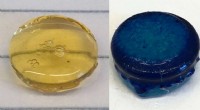
* The solution changes color. The blue color of the copper sulfate solution fades as copper ions are removed, and the solution may become slightly cloudy as copper metal precipitates out.
Here's the chemical equation:
2Ag(s) + CuSO₄(aq) → Cu(s) + Ag₂SO₄(aq)
In simpler terms:
* Silver (Ag) displaces copper (Cu) from the copper sulfate solution.
* Silver forms silver sulfate (Ag₂SO₄) which dissolves in the solution.
* Copper metal (Cu) precipitates out of the solution as a reddish-brown solid.
Key observations:
* Formation of a reddish-brown solid (copper metal)
* Fading of the blue color of the copper sulfate solution
* Possible slight cloudiness in the solution