* Sodium (Na) is a metal and has one valence electron (electron in its outermost shell). It readily loses this electron to achieve a stable electron configuration, becoming a positively charged sodium ion (Na+).
* Chlorine (Cl) is a nonmetal and has seven valence electrons. It needs one more electron to complete its outermost shell and achieve a stable configuration. It gains an electron from another atom, becoming a negatively charged chloride ion (Cl-).
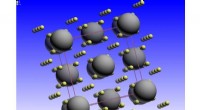
* Opposite Charges Attract: The positively charged sodium ion (Na+) and the negatively charged chloride ion (Cl-) are attracted to each other due to their opposite charges. This electrostatic force of attraction is what holds them together in an ionic bond.
In simpler terms: Imagine two magnets with opposite poles. They naturally stick together because of their opposing charges. Sodium and chloride ions act similarly, forming a strong bond due to their opposite charges.
This ionic bond results in the formation of sodium chloride (NaCl), which is commonly known as table salt.