Methane (CH4) and sulfur dioxide (SO2) are gases with significantly different physical and chemical properties, making their separation relatively straightforward. Here are some common techniques:
1. Condensation:
* Principle: SO2 has a much higher boiling point ( -10 °C) than methane (-162 °C).
* Process: Cooling the mixture below -10 °C will condense SO2, leaving methane in the gas phase. This can be achieved using a condenser or a cryogenic process.
2. Absorption:
* Principle: SO2 is more soluble in certain liquids than methane.
* Process: Pass the gas mixture through an absorbent, like water, aqueous amine solutions, or a suitable organic solvent. SO2 will dissolve in the liquid, while methane will remain in the gas phase. The absorbed SO2 can then be regenerated from the solution by heating or pressure reduction.
3. Adsorption:
* Principle: Different adsorbents have varying affinities for different gases.
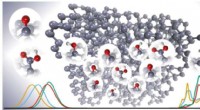
* Process: Use an adsorbent material like activated carbon or zeolite that preferentially adsorbs SO2. Methane will pass through the adsorbent bed. The adsorbed SO2 can be desorbed by heating or pressure reduction, regenerating the adsorbent.
4. Membrane Separation:
* Principle: Membranes selectively allow the passage of certain gases while blocking others.
* Process: Use a membrane that allows methane to pass through while retaining SO2. Different membrane materials and configurations can be used based on the specific requirements.
5. Cryogenic Distillation:
* Principle: Differences in boiling points are exploited to separate components in a mixture.
* Process: The gas mixture is cooled and liquefied. By carefully controlling temperature and pressure, the components are separated by their boiling points. This is an energy-intensive process but can be used to achieve very high purity.
Choosing the right technique depends on various factors, including:
* Concentration of SO2 and methane: This will influence the effectiveness and cost of different methods.
* Required purity of the separated gases: Different techniques offer varying levels of purity.
* Scale of operation: Large-scale separation may require different equipment and processes compared to small-scale applications.
* Economic considerations: The cost of materials, energy, and equipment will play a role in the selection.
Note: It is important to consider the potential hazards associated with handling SO2, a toxic and corrosive gas. Proper safety measures and equipment are essential.