1. Atomic Structure:
* Number of protons (atomic number): This defines the element and dictates its fundamental chemical behavior.
* Number of electrons: The arrangement of electrons in energy levels (electron configuration) determines how readily an atom will gain, lose, or share electrons, leading to chemical bonding.
* Number of neutrons (atomic mass): While the number of neutrons doesn't affect the chemical behavior of an element, isotopes (atoms of the same element with different numbers of neutrons) can exhibit subtle variations in reactivity.
2. Types of Chemical Bonds:
* Ionic bonds: Formed by the transfer of electrons between atoms, creating ions (charged particles). These bonds lead to strong electrostatic attraction between oppositely charged ions.
* Covalent bonds: Formed by the sharing of electrons between atoms. These bonds can be polar (unequal sharing) or nonpolar (equal sharing), impacting the molecule's polarity and reactivity.
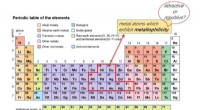
* Metallic bonds: Found in metals, where electrons are delocalized throughout the structure, leading to high electrical conductivity and malleability.
3. Molecular Geometry:
* The three-dimensional arrangement of atoms within a molecule significantly influences its reactivity. For example, the shape of a molecule determines which parts are accessible to other molecules for reactions.
4. Intermolecular Forces:
* These forces arise from the interactions between molecules, affecting properties like boiling point, melting point, and solubility. They include:
* Hydrogen bonding: A strong dipole-dipole interaction involving hydrogen bonded to a highly electronegative atom (like oxygen or nitrogen).
* Dipole-dipole interactions: Attractions between polar molecules.
* London dispersion forces: Weak attractions between all molecules due to temporary fluctuations in electron distribution.
5. Energy Levels:
* The energy levels of electrons within a molecule determine its ability to absorb or release energy during chemical reactions.
6. Factors Affecting Chemical Reactions:
* Temperature: Higher temperatures provide more energy for molecules to overcome activation energy barriers, leading to faster reaction rates.
* Concentration: Higher concentrations of reactants increase the frequency of collisions and thus the likelihood of reactions.
* Presence of catalysts: Catalysts lower the activation energy of a reaction, speeding it up without being consumed in the process.
Key Takeaway: The chemical properties of a substance are a consequence of the intricate interplay of all these factors. Understanding these factors allows us to predict how substances will behave in various chemical reactions and environments.