1. Understand the Chemical Reaction
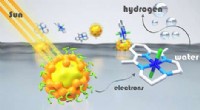
Hydrogen (H₂) reacts with oxygen (O₂) to form water (H₂O):
2H₂ + O₂ → 2H₂O
2. Calculate Moles
* Hydrogen:
- Molar mass of hydrogen (H₂) = 2 g/mol
- Moles of hydrogen = 8 g / 2 g/mol = 4 moles
* Oxygen:
- Molar mass of oxygen (O₂) = 32 g/mol
- Moles of oxygen = 64 g / 32 g/mol = 2 moles
3. Determine the Limiting Reactant
The limiting reactant is the one that gets completely consumed first, limiting the amount of product formed.
* From the balanced equation: 2 moles of hydrogen react with 1 mole of oxygen.
* We have: 4 moles of hydrogen and 2 moles of oxygen.
* This means: Oxygen is the limiting reactant because it will be used up before all the hydrogen is consumed.
4. Calculate Moles of Water Formed
* From the balanced equation: 1 mole of oxygen produces 2 moles of water.
* Since we have 2 moles of oxygen: We will form 2 moles of oxygen * 2 moles of water/mole of oxygen = 4 moles of water.
5. Calculate Mass of Water
* Molar mass of water (H₂O) = 18 g/mol
* Mass of water = 4 moles * 18 g/mol = 72 g
Therefore, the total mass of water formed when 8 grams of hydrogen reacts completely with 64 grams of oxygen is 72 grams.