Crystal Form:
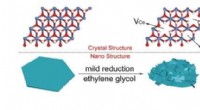
* Definition: The external shape of a mineral crystal, determined by the arrangement of its atoms in a repeating, three-dimensional pattern called a crystal lattice.
* Cause: Internal crystal structure.
* Appearance: Well-defined, geometric shapes like cubes, pyramids, or octahedrons.
* Occurrence: Minerals in a perfect crystal form are relatively rare. Often, crystals are incomplete or intergrown with other crystals, obscuring their ideal shape.
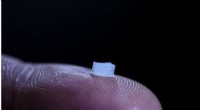
* Example: A perfect cubic crystal of halite (rock salt).
Cleavage:
* Definition: The tendency of a mineral to break along specific planes of weakness within its crystal structure.
* Cause: Weak bonding between atoms in certain directions within the crystal lattice.
* Appearance: Flat, smooth surfaces called cleavage planes.
* Occurrence: Cleavage is a common property of many minerals.
* Example: Mica readily cleaves into thin sheets, while calcite breaks along three directions, creating rhombohedral shapes.
In simpler terms:
* Crystal form is the *shape* of a mineral crystal, while cleavage is the *way* it breaks.
Here's a table summarizing the key differences:
| Feature | Crystal Form | Cleavage |
|--------------|-------------------------------------|-------------------------------------------------|
| Definition | External shape of a crystal | Tendency to break along planes of weakness |
| Cause | Internal crystal structure | Weak bonding in specific directions within the crystal lattice |
| Appearance | Well-defined, geometric shapes | Flat, smooth surfaces (cleavage planes) |
| Occurrence | Relatively rare | Common in many minerals |
It's important to note that:
* Not all minerals have perfect crystal forms or cleavage.
* Some minerals may exhibit both crystal form and cleavage.
* Cleavage can be described based on the number of planes and their angles.
Understanding these two properties is crucial for identifying minerals and studying their properties.