* Potassium (K) is a metal in Group 1 of the periodic table. It has one valence electron (electron in its outermost shell).
* Bromine (Br) is a nonmetal in Group 17 of the periodic table. It has seven valence electrons.
The reaction:
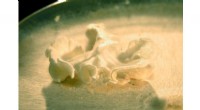
Potassium readily loses its single valence electron to achieve a stable noble gas configuration. Bromine gains one electron to also achieve a stable noble gas configuration. This results in an ionic bond:
* Potassium loses an electron and becomes a positively charged ion (K+).
* Bromine gains an electron and becomes a negatively charged ion (Br-).
These oppositely charged ions attract each other, forming the ionic compound potassium bromide (KBr).
The chemical equation:
2K + Br₂ → 2KBr
This equation shows that two potassium atoms react with one bromine molecule (Br₂) to produce two formula units of potassium bromide.