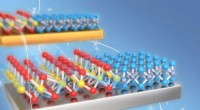
* Surface Area: A larger surface area allows for more contact points between the calcium carbonate and the acid molecules. This increased contact leads to a higher frequency of collisions between reactant molecules.
* Reaction Rate: The rate of a chemical reaction is directly proportional to the frequency of collisions between reactant molecules.
* Powdering: Powdering the calcium carbonate breaks it into many small particles, significantly increasing its surface area compared to a large chunk.
* Result: The increased surface area leads to more frequent collisions between the acid and the calcium carbonate, resulting in a faster reaction rate.
Think of it this way: Imagine trying to dissolve a sugar cube in water. A whole cube will dissolve slowly. But if you crush the cube into powder, it will dissolve much faster because there's more surface area for the water to interact with. The same principle applies to the reaction between calcium carbonate and acid.