Formation and Structure:
* Formed by electrostatic attraction: Ionic compounds are formed when a metal atom (which loses electrons to become a cation) and a nonmetal atom (which gains electrons to become an anion) are attracted to each other due to their opposite charges.
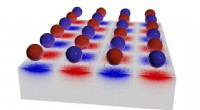
* Crystalline structure: Ionic compounds have a regular, repeating arrangement of ions called a crystal lattice. This structure allows them to maximize the electrostatic attractions between oppositely charged ions.
* Strong bonds: The electrostatic forces holding the ions together in an ionic compound are very strong, resulting in high melting and boiling points.
Properties:
* Conductivity: Ionic compounds conduct electricity when melted or dissolved in water, as the ions are free to move and carry an electric current.
* Brittle: Ionic compounds are brittle because the strong electrostatic forces holding the ions together make it difficult for them to shift past each other. When a force is applied, the crystal lattice can easily break.
* High melting and boiling points: As mentioned earlier, the strong electrostatic forces in ionic compounds require a lot of energy to overcome, resulting in high melting and boiling points.
* Generally soluble in water: Water is a polar solvent, meaning it has a positive and negative end. The positive and negative ends of water molecules can interact with the ions in ionic compounds, pulling them apart and dissolving them.
Examples:
* Sodium chloride (NaCl): Table salt is a common example of an ionic compound, consisting of sodium cations (Na+) and chloride anions (Cl-).
* Calcium carbonate (CaCO3): The main component of limestone and seashells.
* Magnesium oxide (MgO): Used in a variety of applications, including fireproofing materials.
Let me know if you'd like more information on specific ionic compounds or any other related topic!