A compound is a substance formed when two or more different elements are chemically bonded together in a fixed ratio. Here's a breakdown of how to represent a compound, focusing on its elements and the ratio of atoms:
1. Chemical Formula:
- Symbol: Each element in the compound is represented by its chemical symbol (e.g., H for hydrogen, O for oxygen).
- Subscript: A subscript number after a symbol indicates the number of atoms of that element in the compound. If no subscript is written, it is assumed to be 1.
- Example: H₂O (water) - This formula tells us that water is composed of two hydrogen atoms (H₂) and one oxygen atom (O).
2. Molecular Structure:
- A more detailed representation shows the arrangement of atoms and bonds within the compound.
- Line Structures: Lines represent chemical bonds between atoms, and the atoms are often represented by their symbols.
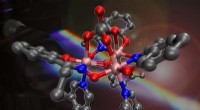
- Ball-and-stick Models: Atoms are represented by spheres (balls) of different colors, and the bonds are represented by sticks.
- Space-filling Models: Shows the relative sizes of atoms and how they fit together in 3D space.
3. Other Ways to Represent Compounds:
- Names: Compounds are often given names based on their chemical composition.
- Properties: Compounds have unique physical and chemical properties that can be used to identify them.
Example: Water (H₂O)
- Formula: H₂O
- Elements: Hydrogen (H) and Oxygen (O)
- Ratio of atoms: 2 hydrogen atoms to 1 oxygen atom
- Molecular structure: The hydrogen atoms are bonded to the oxygen atom at an angle, forming a bent molecule.
Key Points:
* Fixed Ratio: The ratio of elements in a compound is always constant, regardless of the source or method of preparation.
* Chemical Bond: Elements in a compound are held together by chemical bonds, which are forces that result from the sharing or transfer of electrons between atoms.
* New Substance: A compound is a new substance with properties that are different from those of its constituent elements.
Let me know if you want to explore specific examples of compounds and their representations!