Covalent Bonds:
* Single Covalent Bond: The most common type. Hydrogen shares one electron with another atom to form a single covalent bond. This is seen in molecules like H2, HCl, and H2O.
* Double Covalent Bond: Less common, but hydrogen can participate in a double covalent bond. An example is the H2C=CH2 molecule (ethylene).
Ionic Bonds:
* Hydrogen can form ionic bonds with highly electronegative elements like halogens (F, Cl, Br, I) and oxygen. This happens when hydrogen loses its electron to the other atom, resulting in a positive charge (H+) and a negative charge on the other atom. For example, HCl.
Metallic Bonds:
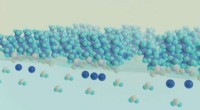
* Hydrogen can form metallic bonds with other hydrogen atoms under extreme pressure, like in the interior of giant planets.
Hydrogen Bonds:
* This is a special type of interaction, not a true bond, but it's very important. It arises from the attraction between a hydrogen atom covalently bonded to a highly electronegative atom (like oxygen or nitrogen) and an electron pair on a neighboring molecule. Hydrogen bonds play a crucial role in the properties of water and many biological molecules.
Summary:
* Most common: Covalent bonds (single and double)
* With electronegative elements: Ionic bonds
* Under pressure: Metallic bonds
* Important interaction: Hydrogen bonds