Imagine a dance floor filled with different partners. These partners represent molecules, the building blocks of matter. In a chemical reaction, these partners move, break apart, and join with new partners, forming entirely new dance groups.
Here's the breakdown:
* Reactants: These are the molecules that start the dance. They are the "ingredients" of the reaction. Think of them as the individual dancers on the floor before the music starts.
* Products: These are the molecules that result from the dance. They are the "new dance groups" formed after the rearrangement of atoms.
The Dance:
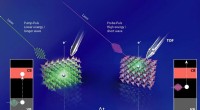
During a chemical reaction, the bonds within the reactant molecules break, and new bonds form between atoms to create the product molecules. This involves the rearrangement of atoms, not their destruction or creation.
Example:
Imagine water (H₂O) forming from hydrogen (H₂) and oxygen (O₂).
* Reactants: Hydrogen (H₂) and oxygen (O₂)
* Products: Water (H₂O)
In this reaction, the bonds in hydrogen and oxygen molecules break, and new bonds form between hydrogen and oxygen atoms to create water molecules.
Key Points:
* Chemical reactions involve the rearrangement of atoms and the formation of new molecules.
* Reactants are the starting materials, and products are the resulting substances.
* The chemical equation represents the symbolic representation of a chemical reaction, showing the reactants and products.
Think of it this way:
* Reactants: Ingredients in a recipe
* Products: The dish you cook
* Chemical reaction: The process of cooking
By understanding the dance of molecules in chemical reactions, we can unlock a deeper understanding of the world around us, from the rusting of metal to the burning of fuel.