Understanding the Properties
* Calcium chloride (CaCl₂) is an ionic compound. This means it exists as positively charged calcium ions (Ca²⁺) and negatively charged chloride ions (Cl⁻).
* Water (H₂O) is a polar molecule. The oxygen atom in water is slightly negative (δ-), while the hydrogen atoms are slightly positive (δ+). This creates a dipole moment in the water molecule.
Attraction
* Opposite charges attract. The positively charged calcium ions (Ca²⁺) will be attracted to the slightly negative oxygen end (δ-) of water molecules.
* Similarly, the negatively charged chloride ions (Cl⁻) will be attracted to the slightly positive hydrogen ends (δ+) of water molecules.
Visualizing the Interaction
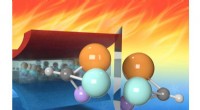
Imagine water molecules surrounding the calcium and chloride ions. The negative oxygen ends of water will point towards the calcium ions, while the positive hydrogen ends will point towards the chloride ions. This interaction is called hydration.
Key Takeaway
When calcium chloride dissolves in water, the ions will be attracted to the oppositely charged ends of the water molecules, leading to hydration and the formation of an aqueous solution.