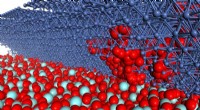
Here's why:
* Ionic bonding involves the transfer of electrons from one atom to another, creating positively and negatively charged ions. These ions then attract each other due to electrostatic forces, forming a strong bond.
* Minerals are typically composed of elements with significantly different electronegativity, making ionic bonding the most favorable.
* Many common minerals like halite (NaCl), calcite (CaCO3), and quartz (SiO2) are primarily held together by ionic bonds.
While ionic bonding is dominant, other types of bonding also occur in minerals:
* Covalent bonding involves the sharing of electrons between atoms. This type of bonding is less common in minerals but can be found in minerals like diamond (C) and pyrite (FeS2).
* Metallic bonding occurs in metals where electrons are delocalized, allowing for high conductivity and malleability. Some minerals like native copper (Cu) and gold (Au) exhibit metallic bonding.
* Van der Waals forces are weak intermolecular forces that can also contribute to the structure of some minerals.
So, while other types of bonding are present in minerals, ionic bonding is the most prevalent due to its strength and the electronegativity differences between common mineral-forming elements.




![Self-Sorting Achieved Through Molecular Geometry of Pillar[n]Arenes](https://www.scienceaq.com/article/uploadfiles/202110/2021102312082264_S.jpg)