Here's why:
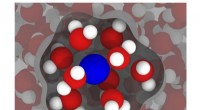
* Hydroxide ions are formed when a water molecule (H2O) loses a proton (H+).
* Ions are always found dissolved in solutions or as part of ionic compounds.
* Solutions can be liquid, solid, or gas, but the hydroxide ion itself is not a separate phase of matter.
Examples:
* Sodium hydroxide (NaOH) is a solid ionic compound that dissolves in water to form hydroxide ions.
* Potassium hydroxide (KOH) is another example of a solid ionic compound containing hydroxide ions.
Let me know if you have any other questions!