Observable Changes:
* Color Change: A change in the color of the reactants or the appearance of a new color.
* Formation of a Precipitate: The formation of a solid that settles out of a solution.
* Gas Evolution: The production of bubbles, indicating the formation of a gas.
* Temperature Change: The reaction may release heat (exothermic) or absorb heat (endothermic), causing a change in temperature.
* Light Emission: Some chemical reactions produce light, like in a firefly or glow stick.
* Change in Odor: A new or different smell may indicate a new substance has formed.
Less Obvious Changes:
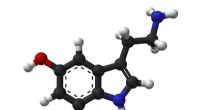
* Change in Chemical Composition: This is the fundamental change in a chemical reaction. New substances are formed with different chemical bonds and properties.
* Change in pH: This is a measure of acidity or alkalinity, and can change as new substances are formed.
* Change in Electrical Conductivity: This can be measured to determine if ions are present, which may form during a reaction.
Important Note: Not all of these changes will be present in every chemical reaction. Some reactions may only show a subtle change in chemical composition, while others may be accompanied by several dramatic changes.
Tools to Detect Change:
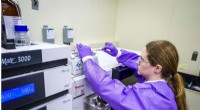
* Spectrophotometer: Measures light absorption and transmission, which can identify specific substances.
* Chromatography: Separates mixtures, allowing identification of individual components.
* pH Meter: Measures acidity or alkalinity.
* Thermometer: Measures temperature changes.
By observing these changes and using specialized tools, scientists can understand the complex transformations that occur during chemical reactions.