Here's a breakdown:
* Single Arrow (→): This indicates a forward reaction, meaning the reactants are being converted into products.
* Example: 2H₂ + O₂ → 2H₂O (Hydrogen and oxygen react to form water)
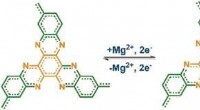
* Double Arrow (⇌): This indicates a reversible reaction, meaning the reaction can proceed in both directions – reactants forming products and products forming reactants. The arrows might have different lengths to show which direction is favored.
* Example: N₂ + 3H₂ ⇌ 2NH₃ (Nitrogen and hydrogen can react to form ammonia, and ammonia can decompose back into nitrogen and hydrogen)
Additional Information:
* Arrowhead: The arrowhead points towards the products.
* Reaction Conditions: The arrow can be accompanied by symbols above or below it to indicate reaction conditions such as heat (Δ), catalyst (Pt), or pressure (pressure).
* Reaction Mechanism: Sometimes, multiple arrows are used to represent a complex reaction mechanism where the reaction occurs through a series of steps.
In summary, the arrow in a chemical reaction is a crucial component that helps us understand the direction of the chemical transformation and how the reactants are transformed into products.