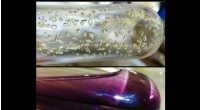
Here's how it works:
1. Alkaline Environment: NaHCO3 creates an alkaline environment in the reaction mixture. This is essential because Benedict's reagent (containing copper(II) sulfate) requires an alkaline environment to react with the sugar.
2. Reducing Environment: The alkalinity of NaHCO3 helps to reduce the copper(II) ions in Benedict's reagent to copper(I) ions. This reduction is crucial for the formation of the colored precipitate that indicates the presence of a reducing sugar.
3. Hydrolysis of Sugars: NaHCO3 can also assist in the hydrolysis of certain non-reducing sugars, such as sucrose. This hydrolysis breaks down the non-reducing sugar into its reducing sugar components, allowing them to react with Benedict's reagent.
However, it's important to note that NaHCO3 does not directly react with non-reducing sugars to cause a color change in the Benedict's test. It primarily provides the necessary alkaline environment and reducing conditions for the copper(II) ions in the Benedict's reagent to react with any reducing sugars present.
In summary, the purpose of sodium hydrogen carbonate solution in the non-reducing sugar reaction is to:
* Provide an alkaline environment.
* Facilitate the reduction of copper(II) ions in Benedict's reagent.
* Potentially assist in the hydrolysis of certain non-reducing sugars.
It is NOT directly involved in the reaction with non-reducing sugars themselves.