Here's a breakdown:
1. Formation of the Tetraamminecopper(II) Ion:
In the presence of excess ammonia, the following reaction occurs:
Cu²⁺(aq) + 4NH₃(aq) ⇌ [Cu(NH₃)₄]²⁺(aq)
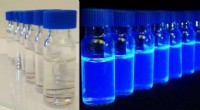
This reaction forms the tetraamminecopper(II) ion, which is a deep blue complex ion.
2. Precipitation of Copper Hydroxide:
If the ammonia concentration is low, the reaction will favor the formation of copper hydroxide precipitate:
Cu²⁺(aq) + 2OH⁻(aq) ⇌ Cu(OH)₂(s)
Ammonia reacts with water to produce hydroxide ions (OH⁻), which then react with copper ions to form the solid copper hydroxide.
3. Overall Reaction:
The overall reaction can be represented as a combination of these two steps:
CuSO₄(aq) + 4NH₃(aq) + 2H₂O(l) ⇌ [Cu(NH₃)₄]²⁺(aq) + SO₄²⁻(aq) + 2OH⁻(aq)
Note:
* The reaction is reversible, and the equilibrium position shifts depending on the concentration of ammonia.
* The presence of other ions, such as sulfate, can affect the reaction.
* In reality, the reaction is more complex than this simplified representation and involves multiple equilibria.
This response provides a general overview of the reaction between copper sulfate and ammonia. For a more accurate and detailed explanation, consult a chemistry textbook or a reliable online resource.