1. Enhanced Spatial Understanding:
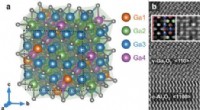
* 3D Representation: Models provide a three-dimensional representation of molecules, allowing for a better understanding of their shape, size, and relative positions of atoms.
* Visualization of Bonds: Models accurately depict the different types of bonds (single, double, triple) and their spatial orientation, which is difficult to convey effectively in 2D drawings.
* Intermolecular Interactions: Models can help visualize how molecules interact with each other, including hydrogen bonding, Van der Waals forces, and dipole-dipole interactions.
2. Improved Learning and Retention:
* Hands-on Experience: Building physical models allows for a more active learning experience, making it easier to remember and understand molecular structures.
* Kinesthetic Learning: The act of physically manipulating models enhances spatial reasoning and kinesthetic learning, leading to a deeper understanding of the concepts.
* Engagement: Models can make learning about molecules more engaging and enjoyable, especially for visual and kinesthetic learners.
3. More Accurate Representations:
* Bond Lengths and Angles: Models can be built to scale, accurately reflecting the bond lengths and angles of real molecules.
* Stereochemistry: Models effectively convey the spatial arrangement of atoms, including chiral centers and enantiomers, which are difficult to represent accurately in 2D.
* Conformations: Models allow for the visualization of different conformations of molecules, helping to understand their flexibility and dynamic nature.
4. Applications in Research and Development:
* Drug Design: Molecular models are essential tools for drug design, enabling scientists to visualize how potential drug candidates interact with target molecules.
* Materials Science: Models help understand the structures and properties of new materials, facilitating the development of advanced materials with specific functionalities.
* Computational Chemistry: Molecular modeling is crucial in computational chemistry for simulating and predicting molecular behavior, providing insights into chemical reactions and properties.
Overall:
While drawing molecules can provide a basic understanding, constructing models offers a more immersive and accurate representation, enhancing spatial understanding, learning, and research applications. The choice between drawing and modeling depends on the specific learning or research objective.