Here's a breakdown of how it works:
1. Energy Levels: Atoms and molecules have specific, quantized energy levels that electrons can occupy. These energy levels are unique to each element and molecule.
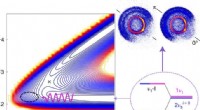
2. Absorption: When light shines on a substance, the photons in the light can excite electrons in the substance's atoms or molecules. If the photon's energy matches the energy difference between two energy levels in the substance, the electron absorbs the photon and jumps to a higher energy level.
3. Specific Wavelengths: Each element and molecule absorbs photons of specific wavelengths, corresponding to the energy differences between its electron energy levels. This absorption results in "dark lines" or "absorption bands" in the spectrum of light that passed through the substance.
4. Unique Fingerprint: The pattern of absorbed wavelengths (the absorption spectrum) is unique for each element and molecule. This unique pattern acts like a "fingerprint" that allows scientists to identify the composition of a substance.
Example:
* Hydrogen: Hydrogen atoms have a specific absorption spectrum with a strong line at 656.3 nm (red), another at 486.1 nm (blue-green), and others in the ultraviolet range. If you observe these lines in an unknown sample, you can confidently identify hydrogen as a component.
* Organic Molecules: Organic molecules have complex absorption spectra due to the presence of various functional groups (like C=O, C-H, etc.). These groups absorb specific wavelengths in the ultraviolet, visible, and infrared regions, helping researchers identify the structure of the molecule.
Applications:
* Astronomy: Absorption spectra are used to identify elements and molecules present in stars, planets, and other celestial bodies.
* Chemistry: Absorption spectroscopy is widely used in analytical chemistry to identify unknown substances, quantify their concentration, and study their chemical reactions.
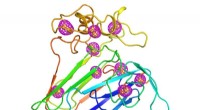
* Biology: Absorption spectroscopy plays a crucial role in studying biomolecules like proteins and DNA, providing information about their structure and function.
Limitations:
* Sensitivity: The sensitivity of absorption spectroscopy can be limited by the concentration of the analyte and the strength of its absorption.
* Interference: Other substances present in the sample might also absorb light, potentially interfering with the analysis of the target compound.
Overall, absorption spectroscopy is a powerful tool for identifying and analyzing the composition of matter. By understanding the relationship between energy levels, absorption, and specific wavelengths, we can utilize the unique fingerprints of absorption spectra to gain valuable insights into the world around us.