Here's a breakdown:
* Atoms are the basic building blocks of matter. They have a neutral charge because they contain an equal number of protons (positively charged) and electrons (negatively charged).
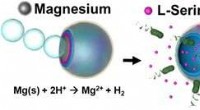
* Ions are atoms that have gained or lost electrons, resulting in a net positive or negative charge.
Here's how it happens:
* Cations: When an atom loses one or more electrons, it becomes positively charged because there are more protons than electrons. These positively charged ions are called cations.
* Anions: When an atom gains one or more electrons, it becomes negatively charged because there are more electrons than protons. These negatively charged ions are called anions.
Why do atoms gain or lose electrons?
* To achieve stability: Atoms tend to gain or lose electrons to reach a stable electron configuration, similar to that of a noble gas. This is because noble gases have a full outer shell of electrons, making them very stable.
* Chemical reactions: Atoms can gain or lose electrons during chemical reactions, forming ionic bonds. In these bonds, the oppositely charged ions attract each other, holding the atoms together.
Examples:
* Sodium (Na) loses one electron to become a sodium ion (Na+).
* Chlorine (Cl) gains one electron to become a chloride ion (Cl-).
In summary:
Atoms become ions when they gain or lose electrons to achieve stability or participate in chemical reactions. The resulting ions have a net positive or negative charge due to the imbalance between protons and electrons.