Here's a breakdown:
* Ancient Philosophy: Ancient civilizations like the Greeks (earth, water, air, fire) and Chinese (wood, fire, earth, metal, water) developed elemental theories to explain the natural world. These were based on observation and were not scientific in the modern sense.
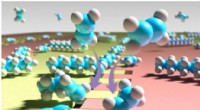
* Modern Science: Modern science breaks down matter into its fundamental building blocks, called atoms. Atoms are made up of protons, neutrons, and electrons. These are the fundamental units of matter, not "elements" in the ancient sense.
* Chemistry: In chemistry, elements are defined as pure substances that cannot be broken down further by chemical means. There are 118 known elements on the periodic table.
Therefore, it's important to distinguish between ancient philosophical concepts and modern scientific understanding.