* Constant Creation: Chemists are constantly discovering and synthesizing new molecules.
* Infinite Possibilities: With the vast number of elements and the ability to combine them in various ways, the theoretical number of possible molecules is practically infinite.
* Isomers: Even with the same atoms, different arrangements can lead to distinct molecules called isomers (think of glucose and fructose, both C6H12O6 but with different structures).
Instead of a specific number, we can consider these factors:
* Known Molecules: There are millions of molecules that have been identified and characterized.
* Estimated Diversity: Scientists estimate that there are likely trillions, if not quadrillions, of possible molecules.
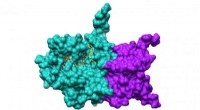
* The Importance of Complexity: The number of molecules increases dramatically with increasing complexity. Large biomolecules, like proteins and DNA, have an enormous number of possible variations.
The key takeaway is that the universe of molecules is vast and constantly expanding.