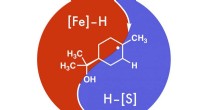
1. Dissolution:
* Polar Solutes in Polar Solvents: This is the classic case of "like dissolves like". Polar solutes (like sugar or salt) dissolve readily in polar solvents (like water). The strong dipole-dipole interactions between the solvent and solute molecules lead to the formation of solvation shells, effectively pulling the solute apart and dispersing it throughout the solvent.
* Non-polar Solutes in Non-polar Solvents: Similarly, non-polar solutes (like oil or fats) dissolve in non-polar solvents (like gasoline). The weak London dispersion forces between the molecules are enough to allow for mixing.
2. Interactions beyond Simple Dissolution:
* Ionic Compounds in Water: Ionic compounds like NaCl dissociate into their respective ions (Na+ and Cl-) when dissolved in water. The polar water molecules surround the ions, forming hydration shells and keeping them separated.
* Acids and Bases: Acids and bases undergo specific reactions with water, leading to the formation of hydronium (H3O+) or hydroxide (OH-) ions, respectively. This changes the pH of the solution.
* Complex Formation: Certain solutes can form complexes with the solvent molecules. For example, transition metal ions can form complexes with water molecules, changing the color of the solution.
3. Insoluble Solutes:
* Oil and Water: Oil and water do not mix because the strong hydrogen bonds in water are much stronger than the weak London dispersion forces between oil and water molecules. This leads to a separation of phases.
Factors influencing solubility:
* Temperature: Generally, increasing temperature increases solubility for most solids and gases.
* Pressure: Pressure affects the solubility of gases, increasing solubility as pressure increases.
* Nature of the Solute and Solvent: As mentioned above, the polarity and other properties of the solute and solvent play a major role.
Key Concepts:
* Polarity: Refers to the distribution of charge within a molecule. Polar molecules have a positive and negative end, while non-polar molecules have a more even distribution of charge.
* Intermolecular forces: The forces of attraction between molecules. The stronger the forces, the more likely a solute will dissolve in a solvent.
* Solvation: The process of solute molecules being surrounded by solvent molecules.
Understanding the interactions between solutes and solvents is crucial in many fields, including chemistry, biology, and engineering. It helps us predict the behavior of solutions, design new materials, and understand biological processes.