1. Molecular Arrangement and Spacing
* Solid: Molecules in a solid are tightly packed and arranged in a highly ordered, repeating pattern called a crystal lattice. This tight packing leaves very little space between molecules.
* Liquid: Molecules in a liquid are closer together than in a gas, but they have more freedom of movement. They can slide past each other, leading to a less ordered arrangement and more space between them.
2. Molecular Interactions
* Solid: Strong intermolecular forces (like hydrogen bonding, dipole-dipole interactions, or London dispersion forces) hold the molecules in a solid rigidly in place. These forces are much stronger than in liquids.
* Liquid: The intermolecular forces in liquids are weaker than in solids. This allows molecules to move around, but still stay relatively close together.
3. Density
* Density = Mass / Volume
* Since the molecules in a solid are packed more tightly than in a liquid, a solid will have a smaller volume for the same mass. This smaller volume results in a higher density.
In simpler terms:
Imagine a box full of marbles. If you shake the box (like a liquid), the marbles will spread out, increasing the space between them. If you leave the box undisturbed (like a solid), the marbles will settle into a tighter arrangement, taking up less space.
Exceptions:
There are some exceptions to this rule, where the solid form of a substance is less dense than its liquid form:
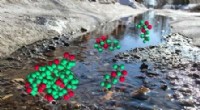
* Water: Water is unique in that it expands when it freezes. This is due to the hydrogen bonding that forms a more open, crystal structure in ice.
* Bismuth: Bismuth is a metal that exhibits a similar expansion upon freezing.
Overall: The denser nature of solids compared to liquids stems from the tighter packing and stronger intermolecular forces that govern their molecular structure.