1. Fixed Shape and Volume:
* Shape: Solids maintain a definite and constant shape. This is because the particles within a solid are tightly packed and held together by strong intermolecular forces.
* Volume: Solids also have a fixed volume, meaning they occupy a specific amount of space.
2. High Density:
* Solids are generally denser than liquids and gases because their particles are packed closely together.
3. Rigidity and Incompressibility:
* Rigidity: Solids are rigid, meaning they resist changes in shape when subjected to external forces. This is due to the strong intermolecular forces between their particles.
* Incompressibility: Solids are nearly incompressible, meaning their volume doesn't change significantly even under high pressure. This is again due to the close packing of particles.
4. Crystalline or Amorphous Structure:
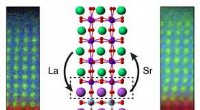
* Crystalline: Many solids have a highly ordered, repeating arrangement of particles known as a crystalline structure. Examples include salt, diamonds, and metals.
* Amorphous: Other solids lack a well-defined structure and their particles are arranged randomly. Examples include glass, rubber, and plastic.
5. Vibrational Motion:
* While particles in a solid are tightly packed, they do vibrate about their fixed positions. This vibrational motion increases with temperature.
6. Low Diffusion Rate:
* The particles in a solid have very limited mobility, resulting in very slow diffusion rates. This means that the movement of particles through the solid is extremely slow.
7. Thermal Expansion:
* Solids expand slightly when heated and contract when cooled. This is because the vibrations of the particles increase with temperature, causing them to move slightly further apart.
8. Melting Point:
* Solids have a definite melting point, the temperature at which they transition from a solid to a liquid state.
Examples of Solids:
* Rocks
* Metals
* Ice
* Wood
* Plastic
* Glass
* Sugar
Note: There are some exceptions to these characteristics, such as materials that exhibit some liquid-like properties at certain temperatures, but the general properties described above apply to most solids.