1. Thermochemical Cycles:
* Temperature: These cycles involve a series of chemical reactions at high temperatures (typically above 800°C) to split water.
* Separation: The different chemical reactions produce hydrogen and oxygen as separate products.
* How it works: These cycles exploit the chemical properties of various materials, like metal oxides, to break down water through a series of reactions.
* Example: The Sulfur-Iodine cycle, one of the most promising thermochemical cycles, involves a series of reactions using sulfur dioxide, iodine, and water to generate hydrogen and oxygen.
2. Photoelectrochemical Water Splitting:
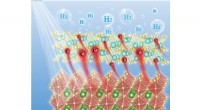
* Temperature: This method uses sunlight to drive the splitting of water.
* Separation: The photoelectrochemical cell uses a semiconductor material to separate the hydrogen and oxygen produced.
* How it works: When light hits the semiconductor material, electrons are excited and used to catalyze the water splitting reaction. The process happens at the interface of the semiconductor and the electrolyte solution.
* Challenge: The efficiency of photoelectrochemical water splitting is still relatively low compared to other methods.
3. Plasma-Assisted Water Splitting:
* Temperature: Plasma is a high-energy, ionized gas that can be generated at temperatures ranging from 10,000 to 100,000 °C.
* Separation: Plasma processes can create a high concentration of electrons and ions, promoting the separation of hydrogen and oxygen.
* How it works: Plasma acts as a catalyst to break the water molecule into its constituent elements.
* Challenge: This method is still under development, and the energy required to create and sustain the plasma can be significant.
4. High-Temperature Water Gas Shift Reaction:
* Temperature: This reaction typically occurs at around 800-1000°C.
* Separation: This process doesn't directly split water into hydrogen and oxygen but rather generates a mixture of hydrogen and carbon dioxide. The hydrogen can be separated through various techniques like pressure swing adsorption.
* How it works: A mixture of steam and carbon monoxide reacts in the presence of a catalyst to produce carbon dioxide and hydrogen.
* Challenge: This method requires an external source of carbon monoxide.
Keeping Hydrogen and Oxygen Separated:
The primary concern with separating hydrogen and oxygen is safety. A mixture of these gases can be highly explosive. Therefore, keeping them separate is crucial.
Here are some common separation techniques:
* Membrane separation: Specific membranes can selectively allow hydrogen to pass through while blocking oxygen.
* Pressure swing adsorption: Different materials have varying affinities for hydrogen and oxygen. Utilizing this, pressure swing adsorption techniques can separate the gases.
* Cryogenic separation: Due to their different boiling points, hydrogen and oxygen can be separated through cryogenic distillation.
* Physical separation: Using barriers like diaphragms or porous materials can keep hydrogen and oxygen physically separated during their production.
Conclusion:
While electrolysis remains the most common method for cracking water, other techniques offer potential alternatives. However, many of these methods face challenges in terms of efficiency, cost, and technological development. Further research is needed to make them more viable for large-scale hydrogen production.