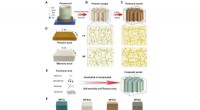
1. Chiral Chromatography:
* Principle: This method utilizes a chiral stationary phase (CSP) in a chromatography column. The CSP interacts differently with each enantiomer, leading to different retention times.
* Types:
* HPLC (High-Performance Liquid Chromatography): A common method for separating enantiomers.
* GC (Gas Chromatography): Less common for enantiomeric separations, but possible with specialized chiral columns.
* Advantages: High resolution and efficiency in separating enantiomers.
* Disadvantages: Can be expensive and require specialized equipment.
2. Diastereomeric Salt Formation:
* Principle: A racemic mixture is reacted with a chiral reagent to form diastereomeric salts. Diastereomers have different physical properties and can be separated using conventional techniques (e.g., crystallization, filtration).
* Advantages: Relatively simple and cost-effective.
* Disadvantages: Requires finding a suitable chiral reagent that reacts with the desired enantiomer.
3. Enzymatic Resolution:
* Principle: Using an enzyme that selectively reacts with one enantiomer. The unreacted enantiomer can be separated from the product.
* Advantages: Environmentally friendly and high selectivity.
* Disadvantages: Finding a suitable enzyme with the desired activity and selectivity can be challenging.
4. Preferential Crystallization:
* Principle: One enantiomer crystallizes out preferentially from a solution of the racemic mixture.
* Advantages: Simple and cost-effective.
* Disadvantages: Requires careful control of crystallization conditions and may not be suitable for all compounds.
5. Asymmetric Synthesis:
* Principle: This method focuses on synthesizing a single enantiomer from the beginning using chiral catalysts or reagents.
* Advantages: Produces a single enantiomer directly, avoiding the need for separation.
* Disadvantages: Can be more complex and expensive.
Choosing the best method:
The most suitable method for separating a racemic mixture depends on factors such as:
* Nature of the compound: Its physical properties, functional groups, and reactivity.
* Scale of separation: Small-scale research or large-scale production.
* Cost and resources: Availability of equipment, reagents, and expertise.
It's important to note that separating enantiomers can be challenging and requires careful consideration of the chosen method and its potential limitations.